Sequeira Lab featured in BBC's Blue Planet III: Future Seas
Associate Professor Ana Sequeira and the global MegaMove initiative feature in the finale episode of BBC's Blue Planet III: Future Seas. A new ANU story and video showcase the science, fieldwork and collaboration helping protect marine megafauna worldwide.

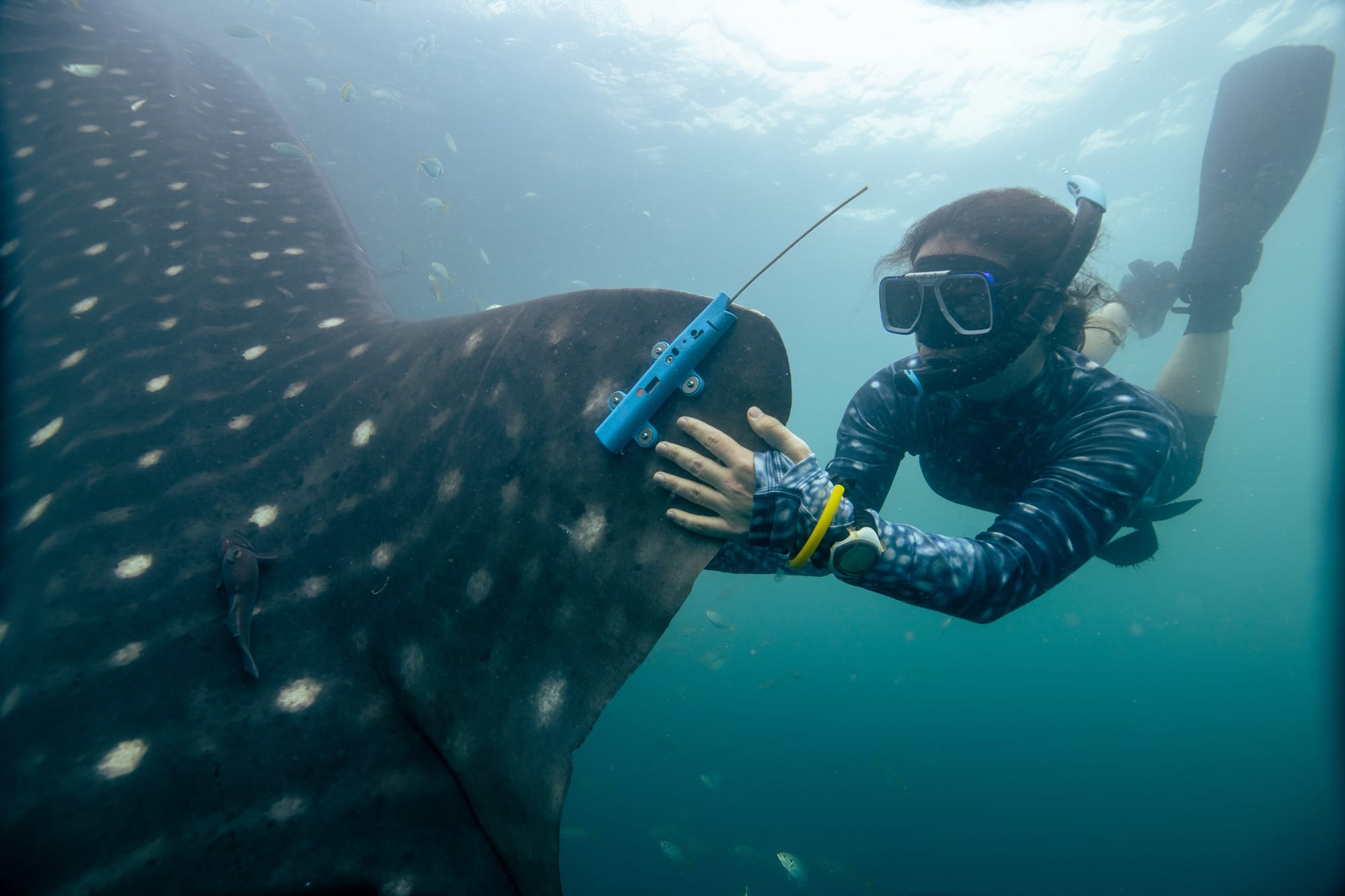
We're thrilled to share that our lab leader Assoc Prof Ana Sequeira's work and the global MegaMove initiative feature in the finale episode of BBC's Blue Planet III, Future Seas, narrated by Sir David Attenborough.
In the episode, Associate Professor Ana Sequeira's work tracking marine megafauna and revealing the ocean highways used by species such as whale sharks, turtles, whales and other ocean giants is highlighted. This work is done through MegaMove, a global collaboration involving almost 400 scientists from more than 50 countries led by Ana. One of MegaMove's most significant recent achievements was bringing together tracking data from over 12,000 animals to identify the most important places in the world's oceans for conservation action.
Coinciding with the BBC announcement, The Australian National University (ANU) has also released a feature story on Ana's work: A biologist's voyage to protect our future seas. The article explores Ana's journey from a lifelong fascination with marine life to leading an international effort to better understand and protect migratory marine species.
The ANU story highlights both the global vision of MegaMove and the fieldwork that underpins it, including Ana-led animal tracking expeditions in Gathaagudu/Shark Bay, Western Australia, where location trackers are carefully attached to species such as tiger sharks, green turtles and dugongs before being released back into the wild. The article also discusses how MegaMove research is helping inform marine conservation policy, including implementation of the High Seas Treaty and international efforts to protect biodiversity across the world's oceans.
To accompany the story, ANU has also released a short video showcasing the science behind MegaMove and the fieldwork involved in tracking marine megafauna around the globe: Why these scientists are tagging marine megafauna around the world.
As Ana reflects in the article:
"My hope for the future is that we humans start understanding how we can share the ocean space with the animals. There is a way to do this in a more sustainable way."
We're grateful to everyone who contributed to making these stories possible and look forward to sharing this exciting milestone with audiences around the world.
📺 Blue Planet III: Future Seas premieres in the UK on 6 December 2026.